There is a great deal of diversity amongMy Hero Academia’scharacters, most of which can be traced back to their mythological roots. Some connections are quite self-explanatory, such as Salaam (Egyptian) and Chimera (Greek) and others are suggestive, as with Endeavor, the Hades or Kronos representative (who ate his own children).All Might might be likened toHercules or Achilles, a mortal-turned-hero with a fatal weakness, and then there’s Tamaki Amajiki, who can essentially be whatever he wants, playing jump rope with mythological boundaries.
RELATED:My Hero Academia: Showdowns We Want To See In Season 7

Elemental-based powers are a dime a dozen, so in most cases, fans can pick a lore and run with it, whereas other characters pose a more specific resemblance to their legendary counterparts. So, seeing as there are so many options to work with, the focus will be placed on the more discreet mythological references sprinkled throughoutMy Hero Academia.
8Hawks - Icarus (Greek)
Most are familiar with the fable of the man who flew too close to the sun, only to have his wings disintegrate, leading him to fall to his doom. Sounds a lot like the epic battle between Dabi and Hawks inSeason 6 ofMy Hero Academia!And while Takami’s wings are clearly not man-made, he can lose the power of flight if he overextends himself, sacrificing feathers as he goes.
Although Hawks doesn’t share Icarus' arrogance or ambition, one could say his starry-eyed allegiance with the Public Safety Commission was arguable to elevate his status. Icarus knew that if he flew too low, or high, his wings would perish. Takami also has to carefully balance himself between two worlds, as an undercover assassin and the reputable #2 Pro-Hero.

7Mei Hatsume - Hephaestus (Greek)
Nicknamed “the celestial artificer,” Hephaestus is renowned for his tinkering skills, producing some of the most extraordinary military equipment in (hypothetical) existence. The Patron of Craftsmen could manipulate both fire and metal and, although Mei’s Quirk is more sight-orientated, her natural engineering talents are so efficient, they may as well be magical!
RELATED:My Hero Academia: Biggest Tearjerkers In Season 6
While Hephaestus often adorned the Gods (and a few lucky mortals) with top-quality armor and weaponry, Mei devotes all her efforts to decking the Heroes out with innovative support items (while creating a lucrative name for herself in the process). She too considers her workshop to be a second home of sorts, and she isseemingly on par with Pro-Hero, Power Loader’s experienced capabilities.
6Tsuyu Asui - Heqet (Egyptian)
Both of these ladies are an amalgamation of a female form and a frog, whereby Heqet (spellings may vary) is often depicted with a woman’s body and a frog’s head. And although Tsu is not a mother herself, she is a crucial caregiver in her family,not to mention her parentsare evidentlyveryfertile, which would make Heqet, The Goddess of Fertility, quite proud!
Similarly to Heqet, Tsu is more of a lover than a fighter and often takes the least violent approach to crime fighting whenever possible. Furthermore, Tsu’s frog-like features and finesse in the water have proven advantageous on the battlefield, particularly during major team-ups.

5Mezo Shoji - Hecatoncheires (Greek)
The term Hecatoncheires literally translates to “hundred-handed ones,” representing a trio of colossal creatures named Briareus (aka Aegaeon), Cottus, and Gyes, brethren to the almighty Cyclopses. Along with their many appendages comes a collection of heads, whereas Kōhei Horikoshi gets much more creative regarding the numerous body parts Shoji can duplicate.
RELATED:My Hero Academia’s Relentless Discrimination
WhileClass A’s Shoji doesnot share the Hecatoncheires' giant stature, he too was villainized purely because of society’s appearance-based fears and unjustifiably deemed a threat. After their unjust imprisonment, the Hecatoncheires were released to become a vital force in the war against the Titanomachy, not unlike Shoji’s contribution to the upcoming heteromorph-fueled war in the Final arc.
4Uwabami - Medusa (Greek)
Uwabami is a very tongue-in-cheek reference to the renowned Gorgon, as this Pro-Hero gets the best of both worlds! Before her serpentine transformation,Medusa was well knownfor her breathtaking beauty and especially admired for her luscious locks. However, when this gorgeous head of hair attracted Poseidon’s attention, defouling Athena’s temple in the process, Medusa paid dearly and was cursed for eternity.
It seems Uwabami is unfamiliar with the repercussions of attention-seeking behavior, as she actively claims the spotlight (ironically, while emphasizing her curls). Uwabami and her snakes are not exactly monsters. However, her self-serving egotism is indicative of everything that is wrong with Hero Society while her intense vanity leaves most with a bitter taste in their mouth.

3Fumikage Tokoyami - Odin (Norse)
Even though blackbirds and ravens are prevalent throughout several mythologies, Tokoyami honors his Nordic roots with his Ultimate Move names (such as Baldur and Ragnarök), essentially aligning himself with the iconic Odin. And while the King of Asgard doesn’t have distinctive bird-like features, he is regularly associated with the raven spirits, Hugin and Munin.
RELATED:My Hero Academia: Best Stain Supporters
While Dark Shadow always hovers nearby, Hugin and Munin are known to sit on their masters' shoulders, although the Nordic ravens are utilized more for reconnaissance than firepower. Hugin, however, is known to have a particularly sinister side, not to mentionOdin’s role as the God of Warand Death. Thankfully, Tokoyami has not been seduced by the darkness and opted to hone his defensive skills, so as not to follow the same destructive path.
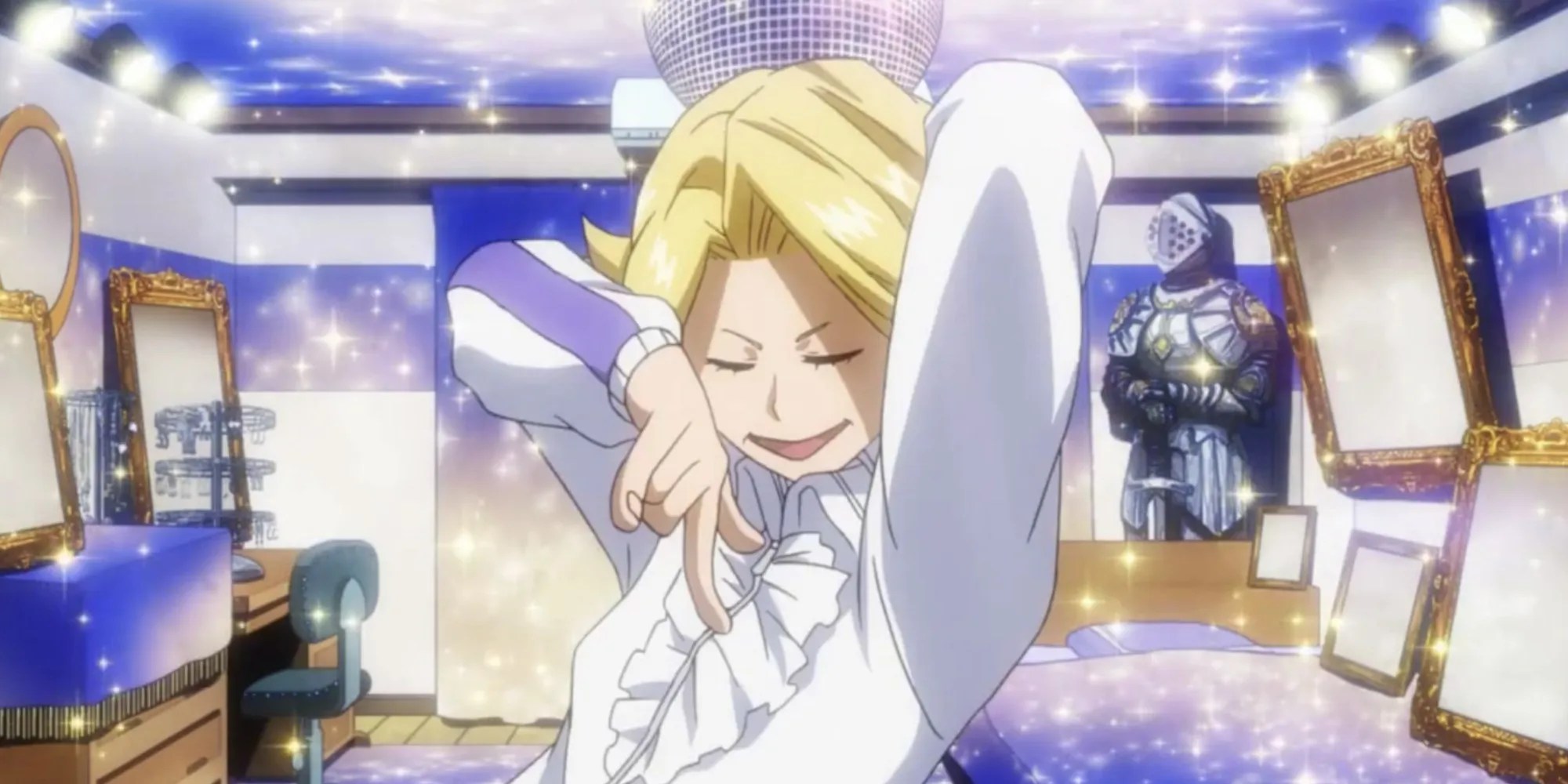
2Yuga Aoyama - Narcissus (Greek)
Much like hisMy Hero Academiacounterpart, Narcissus is well aware of how incredibly attractive he is and will take any opportunity to revel in his own beauty. Both boys unsurprisingly have a fondness for mirrors, to the point where Yuga had decorated his entire room at UA with reflective surfaces for added convenience.
While Yuga and Narcissus' self-love aspect is quite distinctive, their narcissism runs much deeper, as both have a reputation for being incredibly self-serving. Yuga rats out his so-very-trusting classmates to the deadly All For One, endangering countless innocents to improve his own quality of life with a shiny new Quirk.

1Camie Utsushimi - Aphrodite (Greek)
Camie’s Quirk allows her to create very convincible illusions, and this vixen takes things one step further by appealing to her victim’s libidinousside; she most certainly understands the art of seduction! Similarly, Aphrodite is widely known as the Goddess of Love (and lust) who has an overwhelmingly enticing aura about her, with suitors simply falling at her feet, at every turn.
Correspondingly, Camie has built up quite a reputation for being brazenly flirtatious, while her curves have cemented her a spot onMy Hero Academia’swaifu list. Aphrodite is famed for being caught in a love triangle between Ares and Hephaestus, and while Camie attempts to replicate that situation for herself, Bakugo and Shoto appear completely immune to her charms, although fans still get some truly memorableaegyoscreenshot-ops out of their interaction!